
Mahoning County City Directory Collections
Historical directory research in Mahoning County begins with the long Youngstown run at the Mahoning Valley Historical Society, or MVHS, and with the Public Library of Youngstown and Mahoning County, known as PLYMC. MVHS documents Youngstown editions for 1869, 1872, 1875-76, and 1877 forward. Most volumes center on Youngstown, although some also reach Struthers, Girard, Campbell, McDonald, Poland, Canfield, and Lowellville. The directory is evidence from a specific edition, not proof that every person or household appears in every year.
| Collection | Years | Where held | Access |
|---|---|---|---|
| Youngstown city directories | 1869; 1872; 1875-76; 1877-present | MVHS Archives Research Center | Appointment research |
| N. H. Burch & Co. directory | 1886-87 | Internet Archive and FamilySearch catalog | Digitized reference |
| N. H. Burch & Co. directory | 1889-90 | Collection described online | Access may require a library subscription |
| Burch street and householders directory | 1949-50 | Local bibliographic holdings | Historic address research |
| Sanborn map sets | 1884-1992, selected runs | MVHS, OPLIN, and a digitized 1917 set | Building-context research |
The printed run has gaps and changing geographic reach. Capture the volume year and page before comparing it to another source. That simple citation prevents a later reader from confusing a household listing with a later address record.
The MVHS Archives Research Center is at 648 Wick Avenue, Youngstown, and asks researchers to make an appointment at 330-743-2589. It specifically identifies directories and Sanborn maps as good starting places. For a historic address outside Youngstown, ask whether the selected edition reaches the nearby municipality before treating a missing listing as meaningful.
Mahoning County Directory Shelves
PLYMC Main, at 305 Wick Avenue in Youngstown, is the practical library route for old directories, phone books, obituary work, yearbooks, newspapers, and genealogy databases. Its genealogy resources list in-library Ancestry Library Edition, FamilySearch, Fold3, HeritageQuest, MyHeritage Library Edition, the PLYMC Digital Archive, and Ohio Sanborn access. Ask staff for the exact year or reverse-directory run instead of assuming a title is on an open shelf.
The Book-a-Librarian service is a verified fallback when a book, microfilm run, or database needs help. It offers up-to-one-hour virtual, phone, or in-person appointments. The library warns that its form is sent by email, so the question should omit confidential details. The archive and reading-room route is more useful than a current-record portal for material that was never digitized.
See the PLYMC genealogy resource page before planning a research visit.
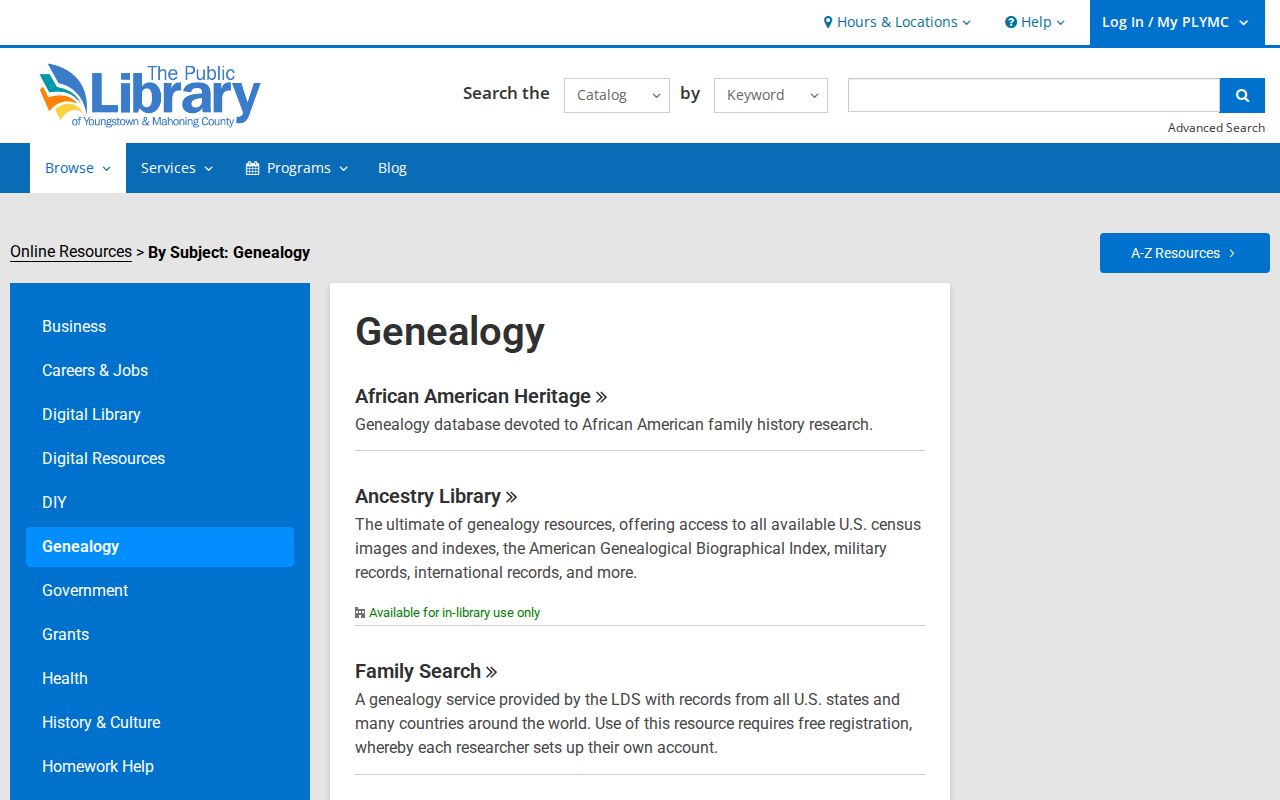
That library route connects a directory search to newspapers, yearbooks, and local assistance without claiming that an online result is complete.
Note: PLYMC says some digitized Youngstown Vindicator issues are missing or poorly scanned, so an empty full-text search is not conclusive.
Mahoning County Digital Directories
Digital access is useful, but it is only one channel. The PLYMC Digital Archive includes Mahoning Valley Heritage material and cemetery notebook or transcription resources. The digitized 1886-87 Burch book on the Internet Archive is a strong starting point because its abbreviation key and sample entries can be examined directly. The 1889-90 collection is described as containing more than 13,700 indexed names, with access depending on the collection route.
A no-result calls for an alternate spelling, a nearby edition, and then the library or MVHS counter. Old directories were commercial publications with uneven indexing and coverage. They are not a complete population count, and a search display cannot settle a question that the underlying volume has not answered.
PLYMC's older local-history inventory also identifies old Youngstown and Warren directories, telephone books, oral histories, cemetery and court records, vertical files, ethnic newspapers, and historic photographs. Each belongs to a different research question. A telephone book can add a contact context, while an obituary or cemetery record can test a later date, and neither should be substituted for the other.
The PLYMC Digital Archive supplies an online entry point for local historical materials.
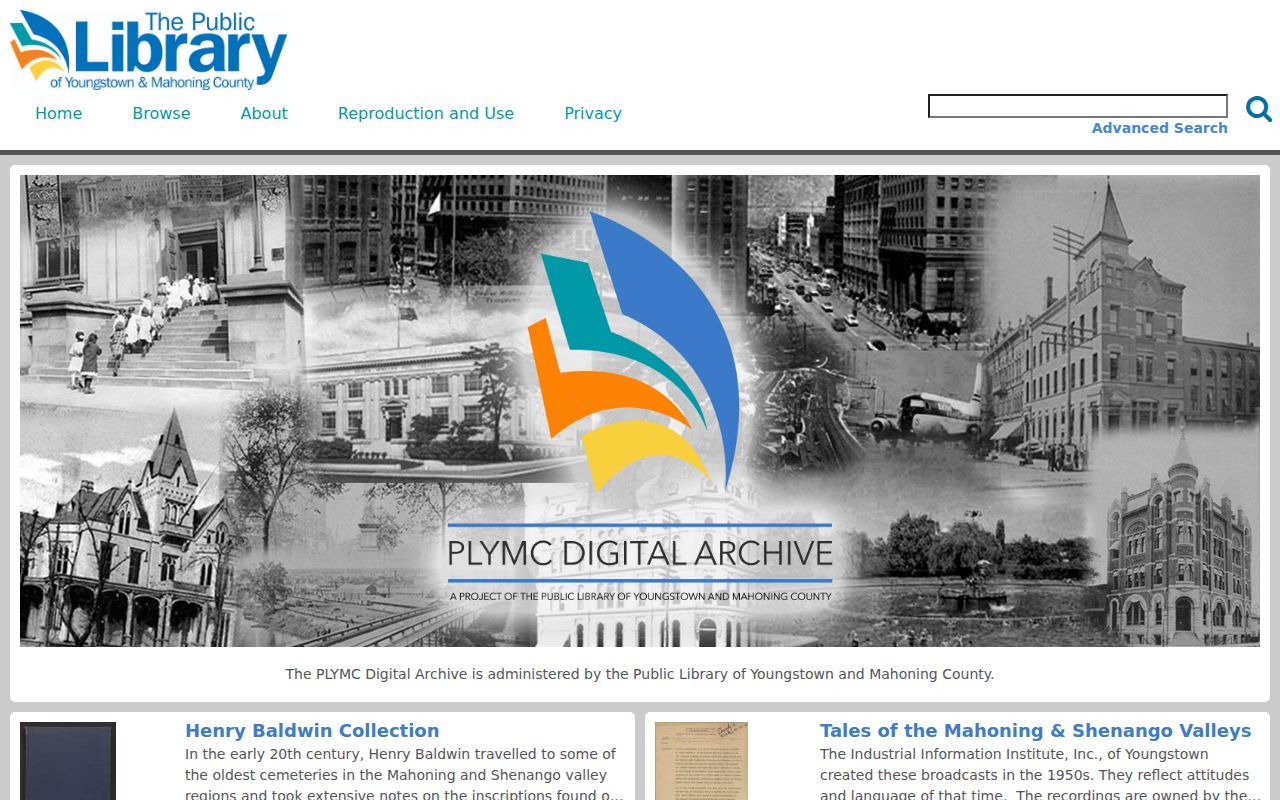
Use a digital image to locate a promising item, then retain its title, date, and page so the reference can be checked at the holding institution.
Reading a Mahoning City Directory
The 1886-87 N. H. Burch & Co.'s Youngstown City Directory shows how local entries can be read. Its key defines ave as avenue, bds as boards, res as residence, and wid as widow. An entry may give a surname and given name, a marital or widow clue, occupation, employer, office address, boarding status, and home address. Not every line carries every field.
| Name | Use the printed spelling, including initials and variants. |
|---|---|
| Residence | res identifies the residence address shown in that edition. |
| Boarding clue | bds indicates boards, not a permanent ownership finding. |
| Widow clue | wid can preserve a spouse connection for follow-up research. |
| Occupation or office | An occupation or listed office helps distinguish people with the same name. |
- Criss-cross directory
- The street-order portion of a volume, used to approach a listed address rather than a surname.
- Householder index
- An address-focused listing of householders in the edition, not a statement about every occupant.
- Abbreviation key
- The volume's own guide to shortened terms. Read it before expanding a mark.
The digitized 1886-87 directory makes the local abbreviations visible.
The Burch page is best used as a dated transcription source, then compared with another edition or a records custodian when the question turns on identity.
Mahoning Historic Directories by Address
The 1949-50 Burch volume explicitly includes a special street and householders directory with telephone numbers. That creates a documented historic address-to-name method: locate the street and number in that edition, then check the alphabetical section for spelling, occupation, or other matching detail. It is an insider shortcut for one year of one publication, not an all-decade address index.
The 1918 Burch directory describes inhabitants over 15, married women, business listings, street directories, and organizations. These changing editorial choices explain why a name can appear differently from one city directory to the next. Treat every edition as a separate record with its own rules.
The 1889-90 collection description identifies the name, address, and occupation coverage described for that directory.
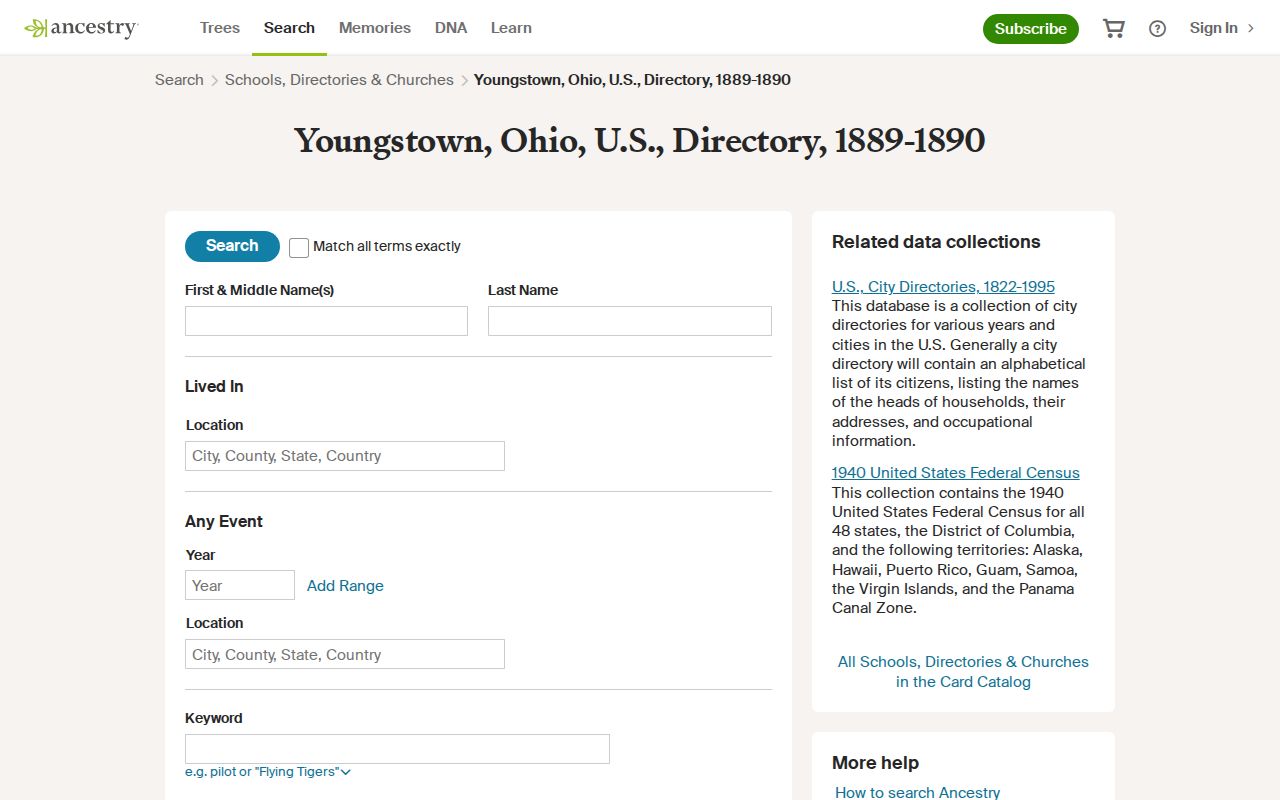
A directory address can guide historical work, but it should not be presented as a current-location claim.
Trace a Mahoning Directory Household
A careful household trail uses a small sequence of sources. Start from a known name or address, then note each edition's exact spelling, address form, and page. The federal census is publicly released through 1950, while a directory is an annual commercial listing. Each answers a different question, and neither replaces the other.
- Find the name or historic address in the most likely directory edition and record its page.
- Read the alphabetical entry for occupation, office address, widow notation, or a boarding cue.
- Move backward and forward through the MVHS directory run, keeping first and last appearances separate.
- Pair selected directory years with the federal census through 1950 and available newspaper or obituary material.
- Check the Recorder when a dated owner transfer needs confirmation, and preserve the volume citation with the result.
A disappearance can mean a move, death, omission, spelling change, or a volume's geographic limit. It does not settle which explanation is true without a second record.
Mahoning City Directory Building Clues
Sanborn maps add the building layer to city directory research. MVHS lists Youngstown runs for 1884, 1889, 1896, 1907-27, 1928-57, 1988, and 1992. They can show a building footprint, use, or neighborhood change, but they do not name the person who lived there. The Ohio Sanborn access point is another route to map research.
When an address looks wrong in an old volume, preserve directional words and compare a map, plat, and legal description before deciding that the property changed. Youngstown's numbering origins at Market/Wick, Federal, Mahoning/Himrod, and Central Square make direction and street orientation meaningful historical details.
The OPLIN Sanborn resource points researchers to historical map access.
Map evidence can test whether the building and address form fit the directory year, while the directory supplies the household clue for that edition.
Mahoning City Directory Gaps
An absent early record deserves caution. PLYMC reports that the county births, deaths, and marriages ledger covers only April 1856 through March 1857, with birth and death reporting restarting in April 1864. WPA workers later indexed the ledgers, but faded handwriting and unreadable names could fail to produce an index card. That documented limitation is a reason to search variants and companion sources, not to assume a local record was destroyed.
Mahoning County was organized in 1846 from Columbiana and Trumbull Counties. A township event near that transition may lead to a parent-county source. MVHS also holds dispersed early material, including probate, court, poll-book, and selected deed records, which gives a fallback route when a city directory begins too late.
Note: A city directory is a useful annual snapshot, but its silence is weaker evidence than a corroborated record from the correct period and custodian.
Mahoning City Directory Archives
Youngstown State University's Maag Library Archives & Special Collections holds roughly 100 Youngstown city directories, along with area Sanborn maps, yearbooks, photographs, oral histories, and local histories. Material is used in the Archives Reading Room with staff present, making it a useful fallback when a catalog lists an item but does not place it online. Its contact number is 330-941-3487.
PLYMC's yearbook routes add another historical connection: in-library Ancestry lists U.S. yearbooks for 1900-2016, while PLYMC cardholders can use MyHeritage Library Edition yearbooks for 1890-1979. MVHS has local high-school yearbooks as well. A yearbook establishes an institutional connection for its period, not a present address. The Youngstown Historical Center of Industry & Labor archives and library have been closed until further notice since October 4, 2025, so use its online collection links rather than planning an in-person visit.
PLYMC is also preserving current oral-history material through its America 250 "Share Your Story!" project. Interviews from Mahoning County residents age 18 and older are scheduled for preservation in the PLYMC Digital Archive through December 2026. That project is a new local historical source in formation, not a current resident directory. Its presence is a reminder to date every source and distinguish an archive from a live record system.