
Mahoning County Previous Residents Sources
Use a source that fits the era. The Auditor card gives today's parcel, legal description, and owner or sale clues. The Recorder then supplies the recorded instrument trail. Directory volumes, census schedules, maps, newspapers, and probate records fill in different parts of the household history. None is a complete list of everyone who lived at an address.
| Source | Years it covers | Where held | What it shows |
|---|---|---|---|
| Auditor parcel record | Current tax-system record | Auditor portal or counter | Parcel, owner, legal description, and acquisition clues |
| Recorder Laredo | Stated 1980-present; another county page says electronic index from January 1985 | Recorder signup and terminals | Recorded parties, instruments, and legal-description trail |
| Records Management microfilm | Millions of 1800s-onward county items | County Records Management | Deeds, mortgages, tax, and court material |
| MVHS directories | 1869; 1872; 1875-76; 1877-present | MVHS Research Center | Historic household and address listings |
| Federal census and newspapers | Census released through 1950; Vindicator 1869-2009 with gaps | Library databases and local repositories | Household, death, and move context |
For a recent transfer, begin with the parcel and Recorder path. For an older address, move early to the terminal, microfilm, and local-history routes instead of assuming the web index reaches the needed date.
Mahoning Previous Residents Start With Parcels
The Mahoning County Auditor Property Search accepts an owner name, parcel identifier, or street address. From a result, capture the parcel identifier, legal description, current owner, and acquisition or sale information before moving to the Recorder. The property card uses three address roles: the situs location, the Deeded Owner Address from the last recorded ownership document, and the Tax Payer Address for correspondence.
Those addresses should never be collapsed into a claim about occupancy. A mailing address can be outside the property, and the parcel card does not supply a household list. The legal description is often the durable bridge when an old street number or neighborhood label has changed.
The Mahoning County GIS / Tax Map adds the spatial step. Its viewer can locate an address, parcel ID, owner, street name, municipality, or other published locator and then use Identify to open parcel attributes and a link to the Auditor card. It also supplies historic aerial imagery and historic tax-map layers. Those images establish parcel or building context, not a past household.
Note: The Auditor's values and taxes are labeled Tax Year 2025 / Pay Year 2026, so read the portal as tax-contextual information rather than a live deed ledger.
Mahoning Previous Residents Online Limits
The Recorder's Laredo Anywhere service is free after signup and states that users may search and print documents from 1980 to present. The Recorder's About material separately describes electronic index access beginning in January 1985, with earlier material in person. Use January 1985 as the stricter online cutoff, while noting the official discrepancy rather than promising a single clean date.
The anonymous AVA/Laredo setup allows Party, Date Range, Document Number, Document Type, Book/Page, Reference Number, Subdivision, and Subdivision Lot/Block. It disables Address and Parcel searches. That is why an address trail needs the Auditor's party and legal-description clues first. Recorder employees cannot search records for a requester; if recording data is not known, the office directs researchers to one of thirteen public computers.
Use the Mahoning County Recorder for current access instructions.
Trace Mahoning Previous Residents Through Deeds
A deed chain follows ownership transfers, not a household roster. It can provide the dated party trail that helps organize a past-resident search. Reconcile the legal description at each link, because name variants or a similar street address do not prove the same property.
- Open the Auditor parcel record and copy the owner, acquisition clue, parcel, and legal description.
- Search the current owner in the Recorder index for the acquisition instrument and record its party names, date, type, and reference.
- Use the seller, or grantor, from that instrument as the next lead, searching for the earlier acquisition as a grantee.
- Repeat the sequence while checking the legal description, lot, block, or subdivision information at each change.
- When the date falls before the usable online coverage, continue at Recorder public computers, older indexes, or Records Management microfilm.
- Grantor
- The party transferring an interest in a recorded document.
- Grantee
- The party receiving that interest. In the backward process, a seller in one deed may appear as a grantee in an earlier deed.
- Chain of title
- The connected sequence of recorded transfers tied to the same property.
- Legal description
- The lot, block, plat, or metes-and-bounds property identity used in deeds. It can outlast a street-number change.
Mahoning Previous Residents on Microfilm
Records Management is the practical historic fallback. The department, formerly Microfilm, began in 1971 and says it reduced millions of county records to film, including 1800s-onward Common Pleas civil and criminal matters, divorces, deeds, mortgages, and tax records. It is at 345 Oak Hill Avenue, basement, Youngstown, with a listed phone of 330-740-2303 and weekday hours of 8 a.m. to 4:30 p.m.
This counter route corrects the common belief that older material disappears when a web search ends. It does not make every record open or searchable by staff. Bring the parcel, legal description, dates, and party spellings already found to make the request or terminal work more focused.
The county fee schedule is an official source for checking current court-related fees.
Confirm copy or record fees with the office that holds the item, since a schedule for one court or record type does not establish the cost of another request.
Mahoning Past Residents in Directories
The 1949-50 Burch directory expressly includes a special street and householders directory with telephone numbers. It can connect a historic address to a householder for that edition, then the alphabetical portion can add an occupation, office address, widow notation, or spelling detail. The method is year-specific. It should not be extended into a claim that the same person lived there in another decade.
MVHS holds Youngstown directories for 1869, 1872, 1875-76, and 1877 forward, with some editions covering nearby communities. PLYMC's local-history staff can help identify an exact volume, telephone book, obituary source, or reverse directory. The historical volumes themselves are described on the Mahoning County city directories page.
PLYMC's Book-a-Librarian service is the documented help channel when a house-history question needs a local collection, reader, or database. It offers up-to-one-hour appointments by phone, virtual meeting, or in person. Give the staff a street, year range, and known name, but do not send confidential material through the emailed form. The service is research assistance, not a paid investigation or a guarantee that a desired volume survives.
The Probate Court informational links also point to FamilySearch Mahoning County probate records for 1846-1909.
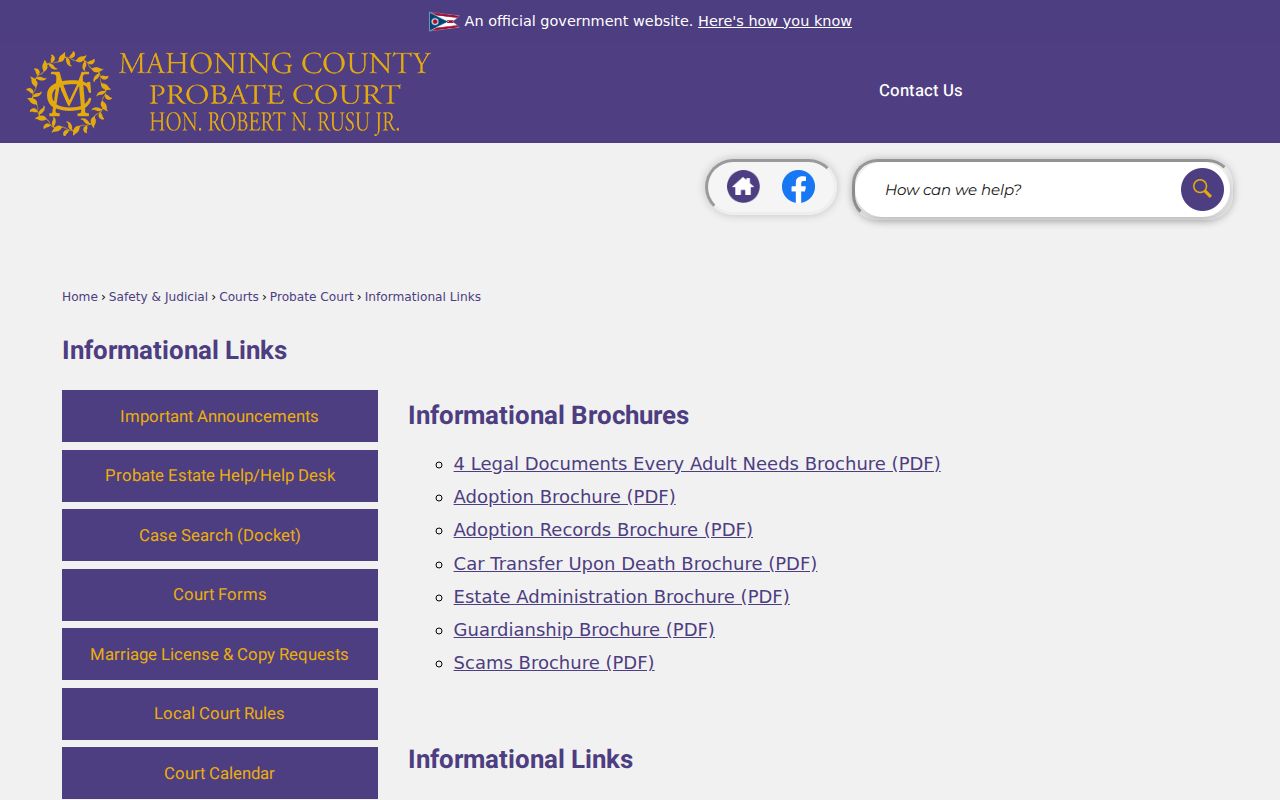
Probate material can add estate, fiduciary, or heir context to a historical trail, but it is not proof of a living person's current address.
Mahoning Previous Residents and Census
Pair directory years with census years through 1950. A census captures an enumerated household at a point in time; a directory captures a commercial compiler's listing in a particular edition. Record the directory page, then compare only the details that line up with the address, names, and period. A newspaper or obituary can help explain a move, death, or estate, but PLYMC warns that digitized newspaper coverage has gaps.
The sequence is simple: historic address to a dated directory listing, then census context, then newspaper, cemetery, or probate material when the trail changes. Sanborn maps can show whether the building existed or changed use. They do not identify a resident.
Early events deserve a separate warning. PLYMC reports that the county births, deaths, and marriages ledger covers only April 1856 through March 1857, and birth/death reporting restarted in April 1864. WPA indexing later faced faded or unreadable handwriting. An absent early index hit is therefore a weak result. Check parent-county, church, cemetery, newspaper, and probate routes before deciding the historical trail has ended.
Old Mahoning Addresses Need Context
Youngstown's local numbering rules use different origins at Market/Wick, Federal, Mahoning/Himrod, and Central Square depending on street orientation and location. When a directory number does not fit a modern address, preserve the original directional abbreviation and road type. Then compare the plat, deed legal description, historic tax map, and the Recorder's YOUNGSTOWN RENUM INDEX BOOK document category.
No authoritative source located a single-year, countywide renumbering event. The right question is whether the records point to the same parcel or building, not whether two similar numbers happen to match. That safeguards an address-history search from a false connection.
Note: Sanborn maps document building footprint and use, while deeds document transfers and directories supply household clues for particular editions.
Mahoning Past Residents Trail Endpoints
Oak Hill and other cemetery resources, obituaries, and Probate Court files can help close a historical trail after a household leaves an address. MVHS lists Oak Hill, Mount Hope, St. Joseph/Rose Hill, Jewish, and Rodef Sholom cemetery material along with estate packets and early court records. Keep the source's scope clear: a burial or estate record can give a dated life event, not a complete residence history.
Mahoning Probate Court keeps estate, guardianship, marriage-license, and adoption-related court records, with a separate docket and case-search route. Historic estate packets at MVHS cover 1846-1900, and the court links to FamilySearch Mahoning probate records for 1846-1909. Use a case number or the exact party and event when requesting an available file. Sensitive, sealed, or adoption-related records have separate limits.
The Oak Hill Cemetery search is one local research lead for burial information.
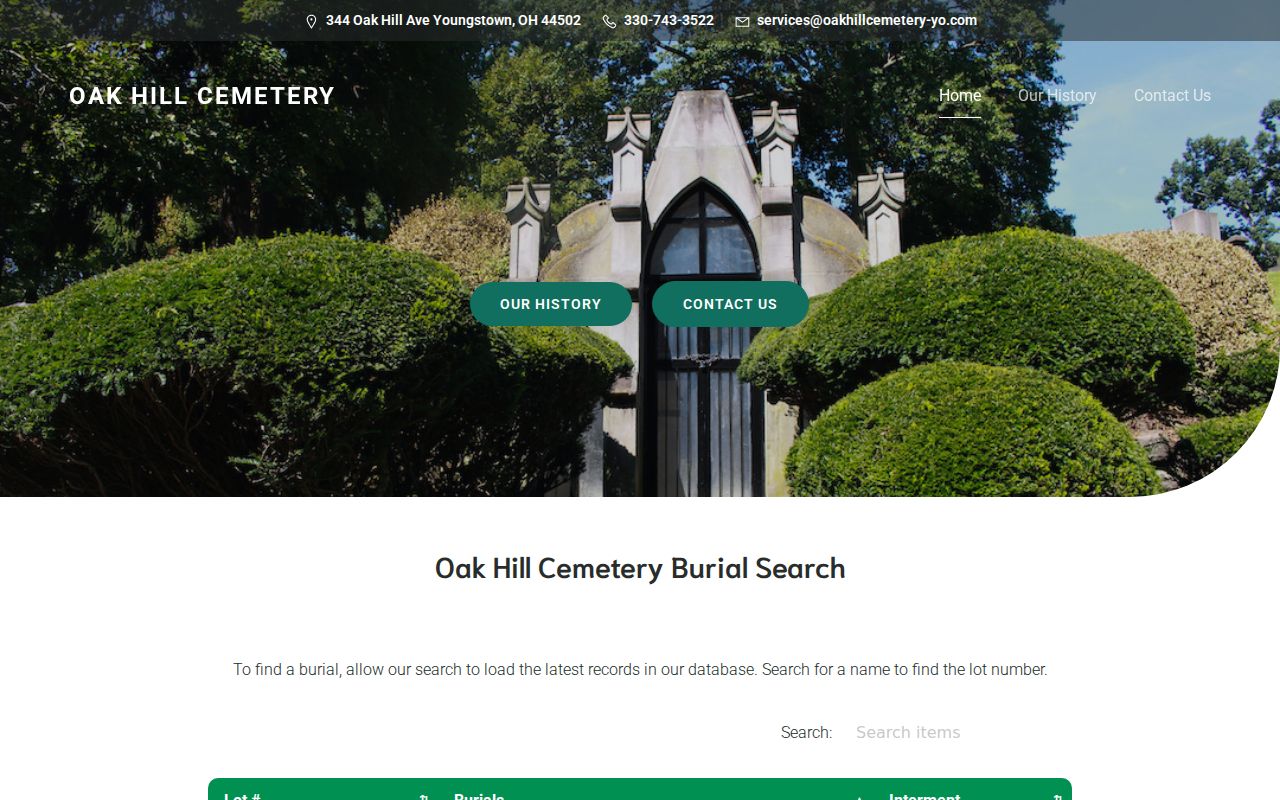
Use cemetery evidence with the directory, deed, and probate timeline to test dates and relationships rather than assuming one record answers every address question.
Lawful use. Mahoning house-history research is suited to family history, estate questions, and personal curiosity. Ohio law prohibits stalking and harassment, including a knowing pattern of conduct that causes physical-harm fear or mental distress under ORC 2903.211.